


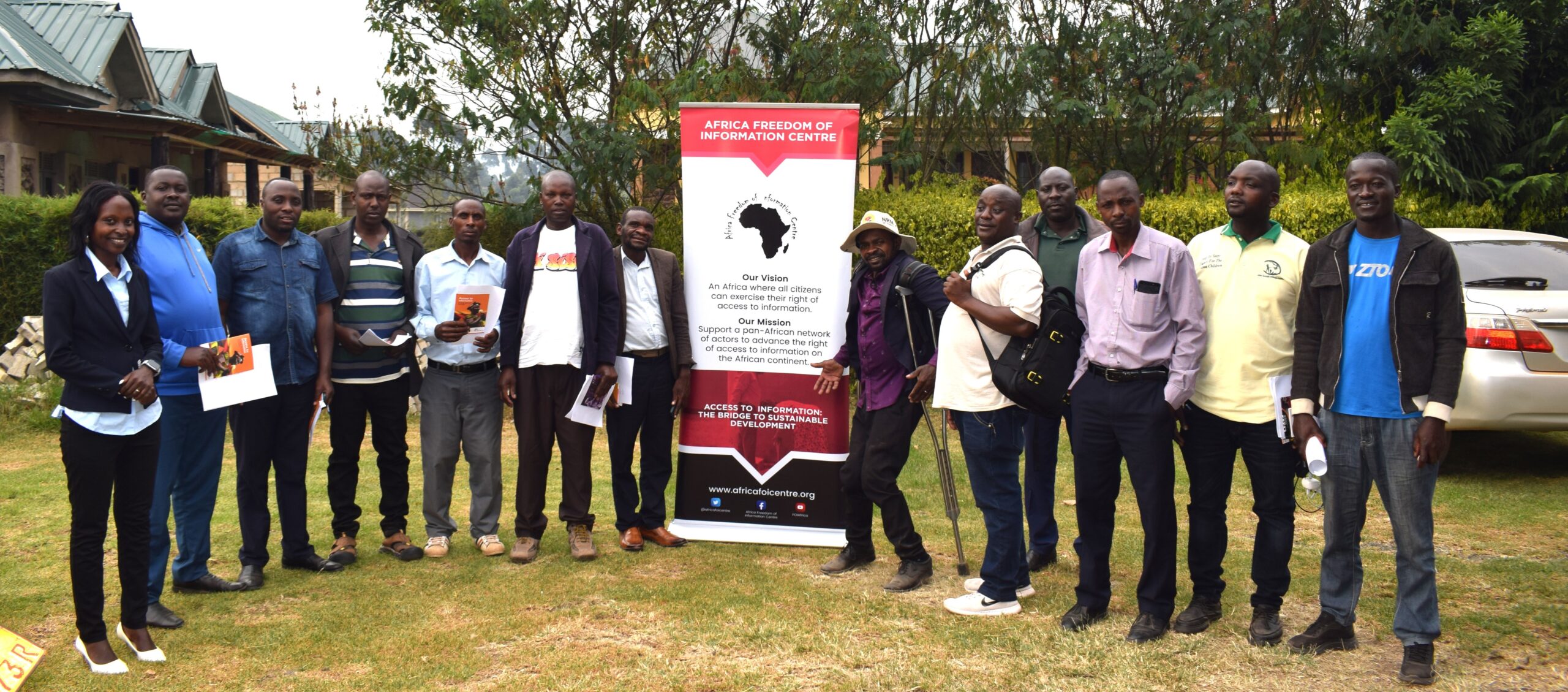
Between 4 and 8 August 2025, the Africa Freedom of Information Centre (AFIC), with support from Twaweza Uganda, delivered Access to Information (ATI) trainings in Rubanda District. These sessions targeted both the demand side (civil society and journalists) and the supply side (parish chiefs and community development officers). Through building the capacity of citizens to seek information and equipping officials to respond, AFIC is advancing a governance model rooted in transparency, accountability, and service delivery.
Turning Rights Into Action
On the demand side, AFIC’s communication and advocacy lead worked with 27 journalists and CSO representatives. These gained practical skills to use Uganda’s Access to Information Act, 2005, in addressing local challenges such as Parish Development Model (PDM) funds, road maintenance, and environmental management. Within weeks, participants had already filed requests with agencies, including the Ministry of Local Government and the National Environmental Management Authority.
One journalist sought details on the eviction of Kigezi farmers from wetlands, while CSOs pursued records on medicine deliveries and funding for Batwa communities.
Building Responsive Institutions
On the supply side, AFIC’s Executive Director, Gilbert Sendugwa, worked with 40 parish chiefs and community development officers to strengthen their role as information custodians. Officials committed to action plans that included
Establishing community notice boards and information centers.
Using local radio and barazas for proactive disclosure.
Improving record keeping for timely responses.
Partnering with CSOs to share information on health, PDM, and community projects.
These steps reflect a shift toward institutional openness, ensuring that government information genuinely reaches citizens.
Scaling Local Change to National Impact
Rubanda’s training is part of a four-district initiative—covering Rubanda, Kyenjojo, Kole, and Kamuli under AFIC’s Strategic Priority Area on Access to Information and Digital Rights. This work directly contributes to:
SDG 16 (Peace, Justice, and Strong Institutions): Strengthening transparent, accountable governance.
Uganda’s governance reforms: Supporting effective service delivery under the PDM and decentralization.
AU Agenda 2063: Advancing participatory and people-driven development.
Why this matters
AFIC’s ATI work demonstrates how small local actions like filing an information request can trigger systemic accountability. For donors and partners, this means that investments in capacity-building and transparency deliver measurable results:
Citizens empowered to act on their rights.
Officials are more responsive to community needs.
Stronger trust between government and the governed.
“We now know that information is not a favor; it is our right. With it, we can build stronger communities.” One journalist from NBS said.
Join Us in Scaling Change
With strategic support, AFIC can expand this model across more districts, ensuring that access becomes not just a law on paper but a pillar of accountable governance and sustainable development.
👉 Learn more and explore our ATI manuals for Journalists and Civil Society Organisation and Public officials
Also watch a video on how access to Information can influence service delivery
