


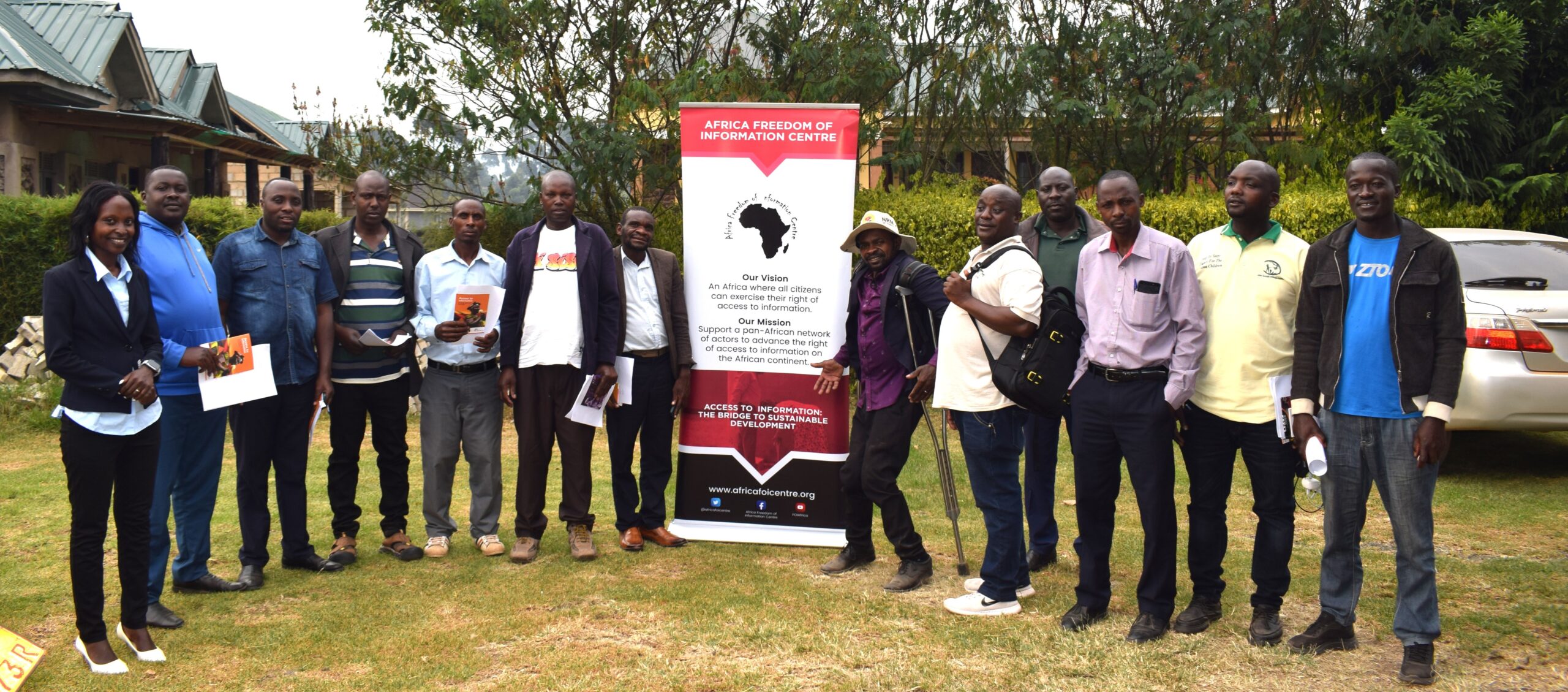
In the lead-up to the International Day for Universal Access to Information (IDUAI) 2025, the Africa Freedom of Information Centre (AFIC) has been on the ground equipping journalists, civil society actors, and community change agents with the tools to demand transparency.



Across districts including Rubanda, Kole, Kyenjojo, and Kamuli, AFIC has trained over 90 participants on how to use Uganda’s Access to Information Act to file, follow up, and apply information requests for public accountability.
The trainings are already bearing fruit. In Rubanda, journalists have filed stories informed by ATI requests, while CSO leaders are mobilizing their communities to track resources such as the Parish Development Model. In Kole, information requests have helped uncover hidden public documents, including a market land title that had been kept in a private home. In Kyenjojo, citizens are demanding updates on road projects and donor-funded grants.
“Access to Information is key for accountability, transparency, and proper planning. We need to have information to give to the grassroots people,” said Francis Aganyer, a rural women empowerment leader in Kyenjojo.
While barriers remain, such as lack of resources, limited awareness, and bureaucratic hurdles, AFIC’s demand-side capacity building is sparking a culture shift. Participants are increasingly confident that the right to know is not a privilege but a legal entitlement, and that information is the gateway to accountability and better service delivery.
Check out this video on how access to information influences value for money in services.
#AccessToInformation #ATIforAll #IDUAI2025 #RightToKnow
