


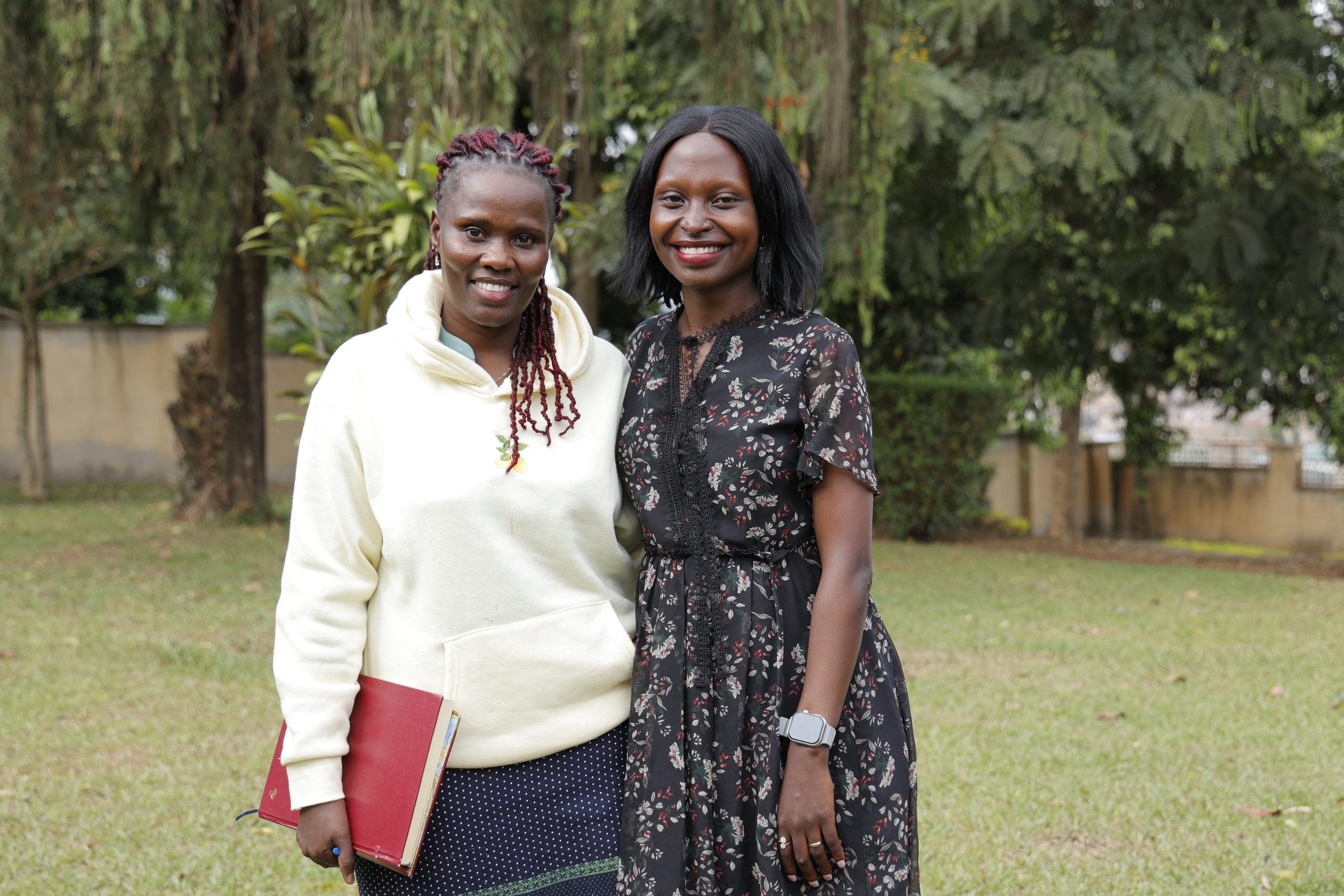
Margret Kyomugisha’s entrepreneurial spirit was sparked by a procurement training program that would forever alter her trajectory. With newfound confidence and skills, she took the leap and registered JPM Instant Solutions East Africa (JPMISEA), quickly securing her first jgovernment contract. As she transitioned from selling Irish potatoes to securing government contracts for city office cleaning services, Margarete’s remarkable journey illuminated the vast, untapped potential of women in public procurement and the transformative power of targeted support and training.
She shared her story in a Q&A session with Gaaba Lakel Maria on 19th March 2025 at her workplace in Mbarara district, Uganda.
Who is Margarete?
My name is Kyomugisha Margarete from Mbarara. I have a registered company called JPM Eastern Solutions East Africa, which I registered in February ,2024. It is a broad company with a number of activities. We are registered for works, supplies, and most procurement activities, and I also deal in fresh foods. I purchase, supply, and deliver Irish potatoes from Kabale and Kisoro. I am located in Mbarara Central Market.
When did you start your procurement journey?
The inspiration for the company came when we were called for training at Lakeview last year by PPDA and AFIC. We were encouraged, especially as women, to start businesses that could engage in public procurement. Immediately after that training, I began the registration process. Though it was a bit expensive to register, I was able to do it with the help of my counterpart in Kampala, and we successfully registered the company in March last year.

When did you receive your first contract?
Shortly after registration, Mbarara District Local Government advertised bids for pre-qualification, and I quickly submitted my application. I was selected for a number of items, though I have not yet received any business from them. Later, Mbarara City also advertised, and I submitted a bid. Fortunately, I was given the opportunity to work with Mbarara City Council. I received a contract for cleaning the office at the White House, and so far, things are going well. I’ve also submitted several bids for various procurements, but many of them are large-scale projects, like construction of schools, which I don’t have the capacity for yet. Slowly, I know we will get there. Being a young company, we don’t meet some of the bigger requirements, like being registered for VAT since I haven’t reached the threshold yet. Additionally, I have not yet had audited books. My company is about to complete its first year in March, but I haven’t had any major business activities besides the cleaning contract with Mbarara City.
Tell me a little more about the training.
The training was like a wake-up call. Before, I thought that registering a company would require a lot of resources, and I also wondered how I would compete with already established companies. However, the training encouraged us, especially women, to get into public procurement, and I decided to take action. Initially, I thought it might not work out, but I’m grateful that it has made a difference.
What knowledge did you pick up from the training and how did it help you?
I learned that the government has made efforts to support women, especially in procurement, and this is where I have been focusing my bids. Most of the procurements for special interest groups like ours have been free of charge, which is a big advantage. After the training, I understood that although registering a company requires an investment, it’s something that will pay off in the long term. I registered my company immediately after the training, and I was happy to see that just a couple of months later, in May or June, Mbarara District Local Government advertised bids, and I was pre-qualified for several activities, such as supplying stationery and consumables. Although I haven’t had business yet, at least I was pre-qualified, and that’s a start.
The training really opened my eyes to the possibilities. Before, I thought only big companies could handle large contracts, like supplying furniture, but now I know even a small company like mine can participate in public procurement. The training helped me understand the procurement language better, even though it’s quite technical, and now I feel confident that I can do business with the government and other private sectors. It has been a success.
What challenges do women-led businesses face?
I think the main issue is capital. Because the bigger the business, the more money it needs to operate. You’ll find that when there are procurement opportunities like the construction of a school, a road, or maybe even a bridge like Katete Bridge—it requires significant upfront capital. You need to have enough money to start the work, but many of us simply don’t. Even the smaller procurements, like supplying toner or stationery, still require money. Sometimes you need to have at least 20 million or more. But for many women, the most we can raise is around four or five million.
Also, many women fear taking loans because of the challenges that come with them. So instead, we rely on the little we have to run our businesses. Men, on the other hand, are often more willing to take risks and go for loans. But many women fear the pressure and stress that come with borrowing—so we end up stuck with very limited capital.
I did hear that the government had set aside some funds for women in banks. I haven’t tried to access it myself. At some point, I assumed maybe it was meant for women in rural areas. Since I work in government myself, I thought I might not qualify—even though I have a private company that’s separate from my government work.
What more support do you think women-led businesses need?
Yes, now that the government has started introducing special interest procurements for women and persons with disabilities, I think they should go further by entrusting us with larger contracts and supporting us through them.
For instance, if there’s a contract for building a primary school, and it’s earmarked for special interest groups, then support us. Give me maybe 40% of the contract value upfront so I can begin the work. Trust me, let me do the job, and then you can pay the rest after. But don’t just expect us to supply furniture or stationery worth 10 million and only get paid afterward—we simply don’t have the money to make that work.
If the government could support us by giving us startup capital, or at least part of the contract amount in advance, we would deliver. Then we get our profit afterward. That kind of trust and support would really make a difference.

Any advice for other women-led businesses?
The first thing is—be honest. If you’re asked to supply something, don’t bring counterfeit goods. Deliver exactly what was requested. Secondly, I encourage women to have registered companies. Without a registered business, it’s almost impossible to access opportunities. Even though registration comes with costs, it’s worth it. Nothing comes on a silver plate—you have to invest. And then there’s commitment. I’ve seen that when you’re committed, you get results. When I was registering my company, I nearly gave up. At one point, I felt like the process was too demanding. The costs weren’t even that much, but it felt overwhelming. Still, I stayed committed. I said, “Let me test this process and see if it’s true that once you register, you can get business from the government.” And I continued. I registered my company and honestly, I can say I haven’t been disappointed.
Background
In Uganda, many women entrepreneurs face numerous hurdles when trying to tap into procurement (government contracts) despite the supportive policies—navigating complex bidding processes, understanding compliance requirements, and securing the necessary resources.
In 2021, the government of Uganda amended the PPDA Act to include regulations that encourage the participation of women-led businesses in public procurement. These regulations introduced a 15% procurement quota for women, youth, and persons with disabilities (PWDs), which was further reinforced in 2024 with guidelines. AFIC has been at the forefront of capacity-building efforts, empowering women entrepreneurs to tap into these opportunities through training sessions focused on key sectors like local government procurement and public services.
Juliet’s Journey into Uganda’s Public Procurement space
Empowering women in business: Praise’s journey from mobile money to public procurement.
