


Government procurement is the biggest public market in the world, with many governments, including across Africa, spending roughly 15% of GDP on goods, works, and services every year. Given the huge sums of money involved, government procurement has the potential to play a game-changing role in tackling labour market segregation and employment gender gaps, which often serves as bottlenecks to women’s financial and social development. This potential can, however, only be unlocked on basis of policies and practices that actively seek to include women-led businesses, and conscious efforts to promote integration and inclusion of women in the labour market. Government contracts can be a lifeline for many businesses and an avenue for local economic growth, but women-led businesses are vastly underrepresented in this market. Gender bias and rigid power dynamics recreate discrimination and oppression in how government money is planned, procured, implemented and monitored.
It was upon this background that, AFIC in collaboration with TISA and OCP set to conduct research in five countries of Eastern Africa that aimed;
- To understand the rates of participation and challenges facing women-led businesses and sole proprietorships.
- To identify which measures are already being implemented or tested to improve fairness and inclusion of women into public procurement in the selected countries.
- To assess the impact of the measures put in place by specific governments to improve fairness and inclusion.
- To recommend actionable changes to improve the current situation, based on the findings of the research and international best practice.
The research was implemented in Ethiopia, Kenya, Rwanda, Uganda, and Tanzania. Findings portrayed exclusion of women-led businesses in public procurement, with only 1% of women businesses winning contracts.
Following engagements with government officials, a number of outcomes aimed to include women-led businesses in the sector were achieved.
Strengthened legal frameworks and the enforcement of laws;
In Tanzania, the Public Procurement Regulatory Authority presented a new bill to the Parliament that was passed into the Public Procurement Act, in May 2023. This Act brings new hope in responding to some of the issues in the study, including affirmative action in the form of reservation of public contracts for women and youth. Members of Parliament also engaged the Minister Finance on the floor of Parliament to provide an explanation to why the law was not being implemented.
In Uganda, the PPDA Act was amendment in June 2021 to provide for Section 59 (b) that provides for reservation schemes for special interest groups including women, youth and persons with disabilities. To operationalize this amendment final draft guidelines have been developed by PPDA and submitted to the Ministry of Finance, planning and economic development for clearance in June 2023. The guidelines provide guidance to procuring entities on how to apply affirmative action for women’s access to public procurement. Also, in Uganda following engagements with PPDA and with some Members of Parliament, there were calls on the floor of Parliament to draft Regulations for the PPDA Act that actualize the promotion of youth and women business’ access to procurement.
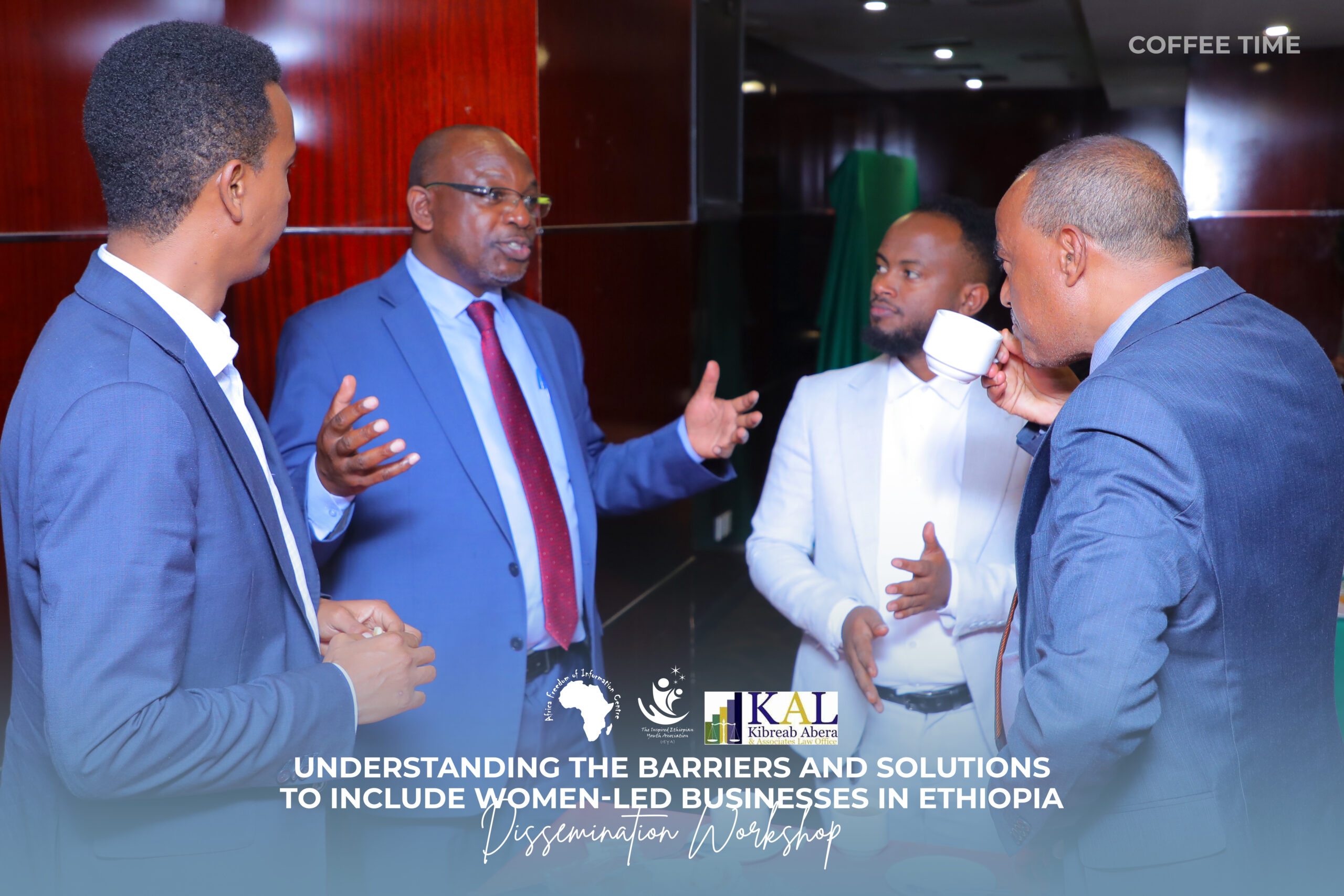
In Ethiopia, the Public Procurement and Property Administration Agency welcomed the recommendation to establish a legal definition for WLBs and also reservation of contracts for women. The ministry as well promised to engage the Ministry of Finance which is leading discussions on the amendment of the PPPA. The Ministry of Women Affairs also welcomed recommendation on reservation of contracts for women and promised to prioritise this in its engagement with other policy actors in government and the Federal Parliament.
In Rwanda, there has been an amendment of in the procurement law of Rwanda through parliament. Parliamentarians commended the study and revealed how they used the study to inform the amendments they made to the new procurement law. The revised Procurement Act was passed in November 2022 and specifically under Sections 6, 23 and 32, addresses the issues of inclusiveness, appointment of at least 30% of the members of tendering committees in each agency to be female and waiver of requirement for bid security on certain contracts.
In Kenya on the other hand, during the signing of the Charter with Women on Post-Election Promises in the mid-2022, TISA engaged with Kenya’s Deputy President, Dr. William Ruto, who is now the President. TISA emphasized the importance of innovation that promotes the participation of women in AGPO. In response, Dr. Ruto initiated the Hustler Fund, which has been formalized into a policy framework to support participation of entrepreneurs, especially women in the informal sector. In addition, the advocacy engagements have led to policy revisions, regarding the beneficial ownership information form published on the Public Procurement Information Portal (PPIP) to include gender information. The revisions aim to develop systems to improve the disclosure of beneficial ownership information, including a focus on gender dimensions in public procurement.
Legal definition of women-led businesses established.
One of the critical areas of concern from the study was the lack of a legal definition of women-led businesses, and lack of formal gender-disaggregated data on their participation. Based on these findings, the consultants engaged the procurement authorities in the study countries to clarify the definition of WLBs. For example, in Uganda, PPDA developed draft guidelines covering all special interest groups, including a definition of WoBs and definition provided to mean an enterprise that is registered with the relevant government body and is at least 51% women owned, controlled and operated on a regular basis by one or more women who are Ugandan citizens.
Disaggregate public procurement data enabled.
The advocacy with the procurement agencies included encouraging the collection of gender-disaggregated data that would help in reporting and also making the right decision to benefit the women-led businesses.
In Uganda, the PPDA has begun the process of improving data collection systems by reviewing their data collection tools and identifying steps to include gender-disaggregated data, including redesigning the data capturing templates on the contractor reference portal, and designing training modules to strengthen WLBs.
In Kenya, the advocacy engagements have led to policy revisions, particularly regarding the beneficial ownership information form published on the Public Procurement Information Portal (PPIP) to include gender information. The revisions aim to develop systems to improve the disclosure of beneficial ownership information, including a focus on gender dimensions in public procurement. In addition, the national government, in collaboration with the National Gender and Equality Commission, has developed a reporting tool for gender mainstreaming in all government opportunities.
In Rwanda, the Rwanda Public Procurement Authority agreed with the recommendation to restructure its procurement portal (umucyo) to capture and report procurement data in gender disaggregated manner. The project team is engaging with RPPA around enhancing the e-GP system to provide gender disaggregated data.
In Tanzania partly as a result of the advocacy, the new e-procurement platform NEST will allow the availability of data in gender disaggregated manner.
Increase access to information on public procurement opportunities, including making e-procurement (eGP) systems more accessible.
All the five study countries are in the process of developing eGP systems which have a high will provide an opportunity for promoting transparency, improving efficiency, and reducing the administrative burden in the procurement cycle. AFIC and its partners continue to engage the government to ensure that these systems are in open formats and capture gender disaggregated data.
Strengthened gender focus of procurement agencies.
In Uganda, the PPDA has created a Gender Committee made up of members from different departments with the purpose of driving the gender agenda across public procurement in the country while in Rwanda, the procurement law has been amended to provide for the composition of respective government agencies’ tender committees to have at least 30% female.
Enhanced capacity for WLBs on public procurement:
The research team advocated across the countries for the training of WLBs or groups that would promote WLB access to public procurement.
In Ethiopia, PPPA committed to train WLBs on public procurement free of charge provided other stakeholders mobilised and covered other costs of the training, Ethiopian Women Business Owners Association undertook to organise a country-wide capacity building programme for WLBs on public procurement while the Ministry of Labour and Skills expressed eagerness to integrate public procurement modules in their training programmes.
In Tanzania, the PPRA committed to promote implementation of affirmative action by raising awareness of procuring entities on the reservation scheme and developing guidelines for its implementation and building the capacity of special groups to help them access more opportunities whereas the Ministry of Community Development, Gender, Women and Special Groups committed to take policy leadership in promoting and coordinating women’s participation in public procurement. In addition, the project collaborated with Mwanamke na Uongozi (women advocacy network) to train 17 women in public procurement.
In Uganda, training modules are being revised to support WLBs, and training workshops have been carried out. AFIC also lobbied GIZ to support further capacity building of WLBs and as a result, there are ongoing discussions between GIZ and Uganda Women’s Entrepreneurs League for a capacity development project.
In Rwanda the specialised cluster on women, youth and PWDs of the Private Sector Foundation committed to integrate procurement modules in the business resource centre that is being established.
In Kenya the issue of pending bills was affecting the financial capacity of WLBs and following the advocacy, the Kenyan Government (Cabinet) setting up of the committee to audit pending bills at national and county governments, has triggered a similar approach by the county governments by setting their own task forces to address the issues of pending bills at the county level. These include Trans Nzoia, Nandi and Machakos, which established their own task force. Trans Nzoia County has successfully cleared Kesh. 551 million pending bills, prioritizing businesses with goods and services valued below Kesh. 500,000.
Commitments to increase access to finance for WLBs
Based on the findings, the research team advocated for greater access to capital through grants, loans, and credit for WLBs. This would help these businesses to formalise and grow to a point where they could more successfully compete for public contracts and have the capacity to properly manage them.
In Uganda, the Ministry of Gender, Labour and Social Development was to integrate issues of WLB participation in the public procurement process in the reviews of the National Gender Policy, and to consider providing opportunities for women to access finance through existing women development projects at the Ministry.
In Kenya, through various engagements held with policymakers, including the presidential advisory team just before and after the 2022 general elections, held meetings with presidential candidates and advocated among others for the establishment of a Hustler Fund, a financing scheme targeting businesses in the informal sector, including WLBs. This Fund has been allocated Ksh. 10 billion (67M USD) in the current fiscal budget 2023/2024. As a result of this, through this study we have determined that there has been a 10% increase in contracts or amounts the government spent on WLBs participating in AGPO at both the national and county government levels since 2021. In particular, the total amount of contracts awarded to WLBs increased from 20,877 tenders (valued at Ksh. 22.1 billion or 150m USD) in 2021/2022 to 22,965 tenders (valued at Ksh. 24.9 billion or169m USD) in 2022/2023.
Increased publicity of findings and media engagements
The media plays a critical role in creating awareness and shaping public opinion in each of the five study countries, and beyond. Researchers conducted outreach to both print and electronic media, and there was good reception of the study’s findings in all the countries. For example in a total of 32 media publications have published articles related to the study across the project countries, helping to raise awareness of the barriers and call stakeholders to act on the recommendations, as well as sharing good practices for replication.
Get In Touch With Us Today
- Civil Society Letter to States Parties to United Nations Convention against Corruption
- Promoting Freedom of Expression and Access to Information in East Africa: AFIC Launches New UNESCO–IPDC Project
- Reclaiming Our Data Futures: AFIC Leads Community Dialogue on ACHPR Resolution 620 at DataFest Africa 2025
- Uganda Marks IDUAI 2025 with a Call for Digital Accessibility to Public Information
- Sénégal : La promulgation de la loi sur l’accèsà l’information, une étape importante pour la transparence
