


3 December, 2024
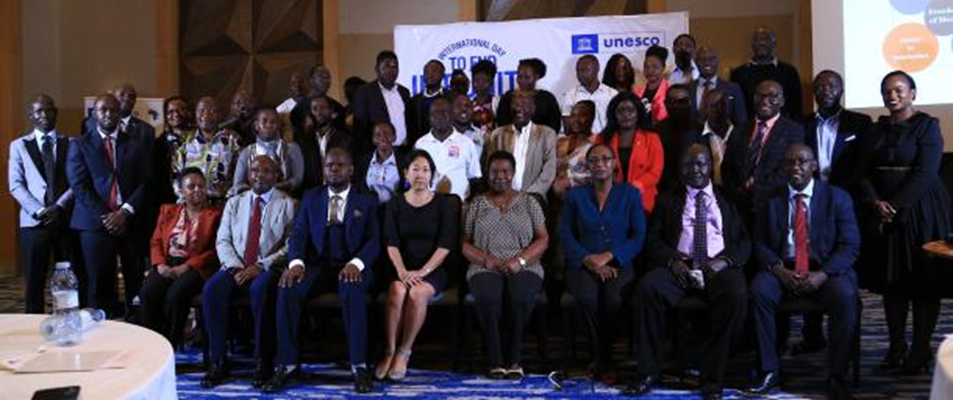
On 4 November 2024, UNESCO, UNHCR in partnership with the Africa Freedom of Information Centre (AFIC), hosted a pivotal multi-stakeholder dialogue in Kampala, Uganda. The event, commemorating the International Day to End Impunity for Crimes Against Journalists (IDEI), focused on enhancing the safety of journalists, with a particular emphasis on addressing the rising issue of Technology Facilitated Gender-Based Violence (TFGBV) targeting female journalists in Uganda.
The event brought together diverse group of stakeholders including government officials, human rights defenders, civil society representatives, and journalists in their shared commitment to address the challenges faced by female journalists in Uganda, and across the African continent.
Urgent Call for Action
Misako Ito, UNESCO Regional Advisor for Communication and Information in Africa, opened the event highlighting the alarming rise of impunity faced by journalists, particularly in conflict zones, where freedom of expression is increasingly under threat. She advocated for a need of a comprehensive five-year strategic plan to combat impunity and bolster the protection of journalists across Africa.
“Journalists should never be silenced by violence or by any kind fear,” Ms. Misako asserted “We must establish a solid foundation for the ongoing efforts to guarantee their safety.”
Collaboration for Change
Gilbert Sendugwa, Executive Director of AFIC, addressed the participants, emphasized the need for collaboration among the stakeholders to end impunity for the crimes against journalists. He highlighted the Ugandan government’s commitment to amending the Access to Information Act of 2005, aligning it with the international human rights standards. Sendugwa also raised concerns about the growing threats of disinformation and electoral violence ahead of Uganda’s 2026 elections. He urged the Uganda Human Rights Commission, the Electoral Commission, and civil society organizations to work together to mitigate these challenges.
John Okande, UNESCO Programme Officer, emphasized the role of international mechanisms in combatting impunity. He strongly advocated for capacity-building of stakeholders, and dialogue to ensure that journalists receive justice. He also stressed the need for a robust implementation of a comprehensive UN Plan of Action framework for journalists’ protection. He stressed the importance of the synergy between national initiatives and international frameworks to set a pathway to safeguard press freedom and address emerging challenges.
Spotlight on Female Journalists
The key focus of the dialogue was on the issue of increasing online gendered violence faced by female journalists. Grace Kakooza, Advocacy and Communications Officer at AFIC, highlighted the impact of cyberbullying, sexual harassment, and sexist comments, which often force women out of journalism and media. Kakooza called for robust measures to protect female journalists and to promote gender equity within media industry.
During a panel discussion moderated by Regina Nalwoga, an NTV Uganda journalist, experts and journalism professionals explored strategies to especially to strengthen the safety of women journalists. Moses Mulondo, Editor at New Vision, noted the impunity enjoyed by powerful individuals often leaving journalists without avenues for seek support when they face threats or violence. He emphasized the specific challenges faced by female journalists, including online harassment and misogynistic comments on social media.
Charity Ahimbisibwe, Chairperson of the Uganda Media Women’s Association (UMWA), echoed these concerns, stressing the psychological toll of online abuse on female journalists. She called for stronger protective measures and better support mechanisms to ensure women can continue in a safer environment.
Tackling Impunity and Supporting Journalists
Dr. Adolf Mbaine, Senior Lecturer at Makerere University, painted a grim picture of widespread impunity in Uganda, describing the pursuit of justice for journalists as a distant dream. He strongly stressed the need for systemic reforms to ensure accountability for crimes against journalists.
Human rights defender Hon. Miria Matembe urged Ugandans to take collective responsibility in addressing impunity and protecting human rights. She emphasized the importance of ensuring that journalists can work without fear of retaliation.
AIGP Charles Kataratambi, representing the Uganda Police Force, emphasized the importance of collaboration between journalists and law enforcement. He assured the participants that police officers who have been involved in the attacks on the journalists have been charged, and that the force conducts sensitization programmes every three months to address violations against journalists.
Julius Mucunguzi, Head of Public Relations at the Uganda Independent Electoral Commission, condemned violence against journalists, particularly during elections. “Violence against journalists during the election process is unacceptable,” Mucunguzi stated.
Strengthening Media Regulations
Robert Sempala, Executive Director of Human Rights Network for Journalists-Uganda (HRNJ-U), called on media and communications regulators to prioritize the protection of journalists’ rights. He stressed the importance of a robust regulatory framework that not only safeguards press freedom but also ensures the safety and dignity of journalists in their work.
The event served as a crucial platform for uniting various stakeholders, including academia, law enforcement, human rights defenders, and media professionals, in the fight against impunity for crimes committed against journalists. The discussions reinforced a global commitment to safeguarding journalists, ensuring their safety, and promoting freedom of expression, both in Uganda and across the world.
Get In Touch With Us Today
- Civil Society Letter to States Parties to United Nations Convention against Corruption
- Promoting Freedom of Expression and Access to Information in East Africa: AFIC Launches New UNESCO–IPDC Project
- Reclaiming Our Data Futures: AFIC Leads Community Dialogue on ACHPR Resolution 620 at DataFest Africa 2025
- Uganda Marks IDUAI 2025 with a Call for Digital Accessibility to Public Information
- Sénégal : La promulgation de la loi sur l’accèsà l’information, une étape importante pour la transparence
