


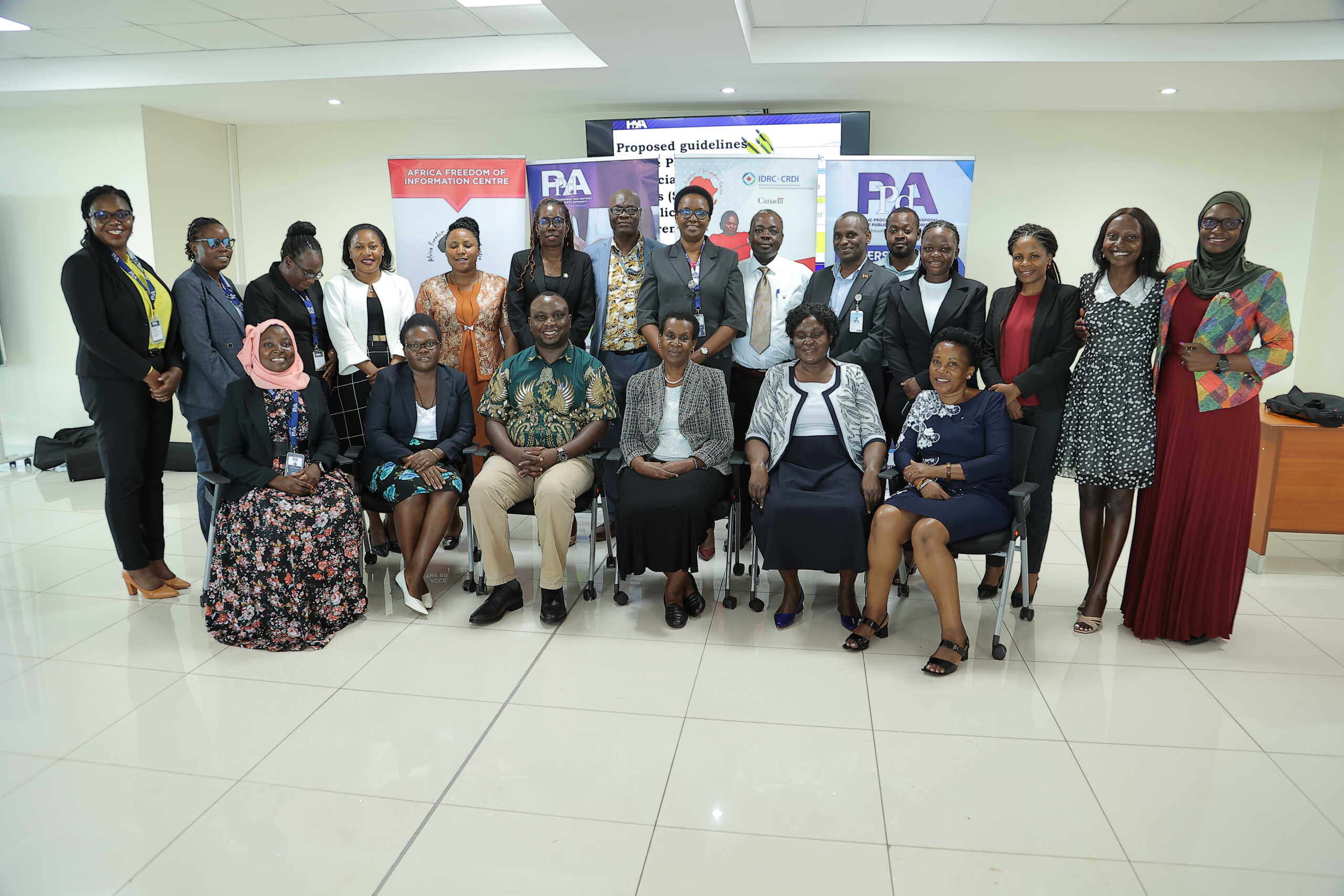
While Uganda has made progressive laws and policies, including increasing women’s participation in
public procurement; a done by Africa Freedom of Information (AFIC) in partnership with Open Contracting Partnership and The Institute for Social Accountability in Uganda, reveals that lack of effective implementation undermines otherwise good policy intentions.
The study which aimed to identify barriers, examine existing interventions and solutions to increase women’s participation in the country found that less than 1% of women-led businesses win public procurement.
The project’s early engagement induced the amendment of the Public Procurement and Disposal of
Public Assets Authority (PPDA) Act in 2021 to provide for the participation of women (plus youth and
PWDs).However, implementation and enforcement of the new provisions is yet to start.
According to Global Integrity, Uganda has a strong history of developing good policies which however, remain poorly or unimplemented, making it the leader of countries with the widest policy implementation gaps.
One of the greatest challenges identified by the report were;
Delayed payments;
The law under Regulation 49(3) of the PPDA Contracts Regulations provides that suppliers and contractors should be paid within 30 days of issuing invoices. However, the research found that payments are routinely delayed for as long as 3-5 years. While this affected all contractors, WLBs were particularly disproportionately disadvantaged because of limited capacity, lack of adequate collateral security to secure alternative and stable financing.
The lack of a legal definition of WLBs
This has had a profound effect on policy implementation especially in respect of identifying and targeting specific groups, capacity building and measuring progress towards policy implementation and outcomes in a gender disaggregated manner.
The study also found that other key policy frameworks like the National Development Plan and the National Gender Policy had not gone far enough to open up opportunities for WLBs. Operational barriers included lack of access to information on tender opportunities, delayed payments, high cost of bidding, lack of capacity to interpret tenders and prepare responsive bids and failure to access funding opportunities among others.
Consequently, 70% of the WLBs participating in government tendering were based in the urbanized
districts Kampala and Wakiso districts out of the country’s 146 districts including relatively large cities
of Mbarara, Mbale, Fort Portal, Masaka and Arua. Corruption, sexualization of contracts, delayed
payment, lack of awareness of laws and policies, lack of access to information on tender opportunities,
and inadequacy of capacity enhancement programmes greatly affects rural based WLBs.
The study further reveals that women have strong ambitions for business. However, the majority do
not participate in the government’s procurement market. Whereas 38% of the businesses are owned
by women, only 44% of these are registered on the national supplier database, and only 1% of the
registered businesses have participated/bided for government tenders.
It is noteworthy that 38% of the WLBs engaged in the study had been contracted for catering
services, stationery, supply of agricultural inputs or clothing services and only 16% engaged in
construction works which are relatively more lucrative and have better high profit margins. Thus, WLBs
undertake low value contracts, with small margins, delayed payments and high cost of capital make it
difficult for them to survive in business, let alone grow their businesses.
The study recommends;
PPDA and CSOs should strengthen monitoring the implementation of affirmative policies in respect of WLBs participation in public procurement;
key performance indicators and targets should be set to be achieved at the level of each agency
and these should be regularly, reviewed internally within the agency and independently by regulators
and CSOs.
Government should increase access to information on tender opportunities by WLBs;
This calls for a review of channels used to advertise opportunities, when, where and how they publish that information.
Government should urgently enforce measures for timely payments of contractors;
By strengthening transparency on payments, delays induced by corruption and inefficiency will be addressed, provide people with opportunities to discuss issues that may arise with unfairness in the payment processes.
Sanctions and incentives;
Policy and decision-makers should priorities sanctioning officials who violate the rules and rewarding those who comply. This could take the form of but not limited to the name and shame those who violate the rules and annual awards to the best compliant officials and entities.
Strengthen capacities of Women-Owned Businesses;
Government and development partners should design and implement capacity
strengthening programmes targeting WLBs for them to effectively participant in public procurement
opportunities.
